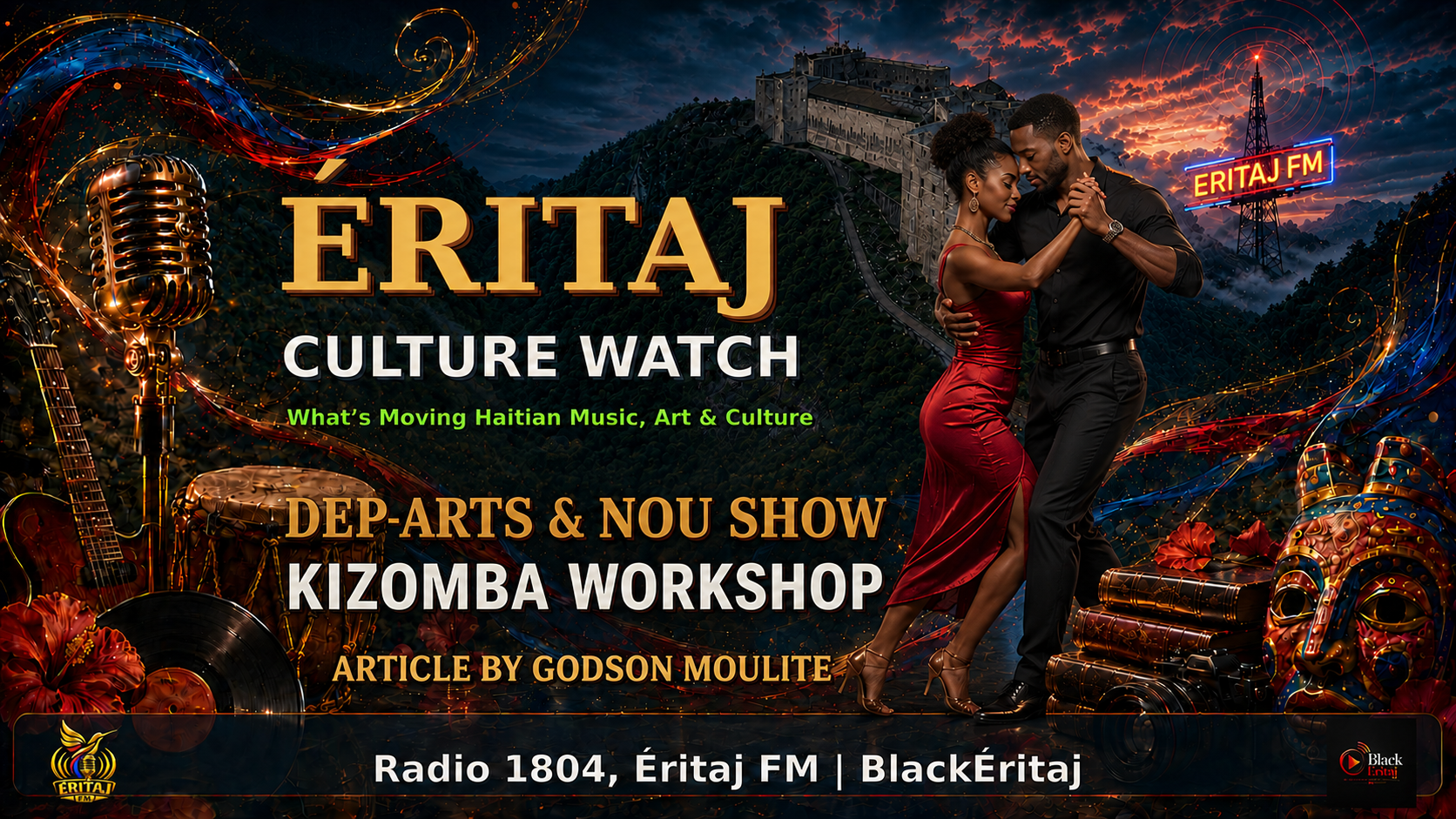
DEP-ARTS Production and Nou Show have concluded a month-long Kizomba workshop that brought together people drawn to dance, culture and physical expression. More than a sequence of lessons, the initiative created a temporary community in which participants learned to communicate through rhythm, balance, attention and movement.
Coach Jeffwood guided the dancers through the Kizomba experience. His instruction and commitment helped newcomers enter the form while allowing more experienced participants to deepen their understanding of its distinctive language of connection and harmony. Organizers thanked the dancers for the enthusiasm and discipline they brought to the program, recognizing that a workshop only comes alive when its participants are willing to learn together.
The initiative also received support from Kiutty Store, Lynkizz and Bon Tigrenn Production. Their involvement demonstrates how local businesses and cultural organizations can work together to create opportunities for artistic education.
When the body becomes a meeting place
Kizomba emerged in Angola during the late 1970s and early 1980s, developing from Angolan semba while entering into conversation with musical influences that included Caribbean zouk. Its history is therefore already a history of movement between Africa and the Caribbean, between inherited rhythm and modern urban life.
Within a Haitian cultural setting, that journey carries particular resonance. Haïti has always received, transformed and returned rhythms to the wider Black Atlantic world. Konpa, zouk, semba and Kizomba do not share one origin, but they have encountered one another across migration, radio, dance floors and the cultural imagination of several generations.
Kizomba asks dancers to listen with the entire body. The smallest shift in direction becomes a sentence. A pause becomes punctuation. Two people must remain independent while moving through the same rhythm. That lesson extends beyond choreography. It offers a quiet model for community itself.
At a time when insecurity and economic hardship continue to weaken access to cultural life in Haïti, sustained artistic instruction has social importance. A month-long workshop creates more than competent dancers. It provides structure, discipline, confidence and a place where people can meet outside the language of crisis.
The closing of one workshop, not the end of the movement
DEP-ARTS Production and Nou Show have indicated that additional artistic projects are already being prepared. Their message to the public is simple: “Rete konekte ak ekip la.” Stay connected with the team.
The conclusion of this workshop should therefore be understood as the opening of another circle. Every participant carries the experience onto another dance floor, into another friendship and perhaps toward another generation of students. The music may stop at the end of a session, but the rhythm continues walking inside the people who learned to hear it.
Éritaj FM congratulates DEP-ARTS Production, Nou Show, coach Jeffwood, the participating dancers and the supporting partners for investing in cultural education. Initiatives like this remind us that art is not simply something a community watches. Art is something a community practices together.
Reporting and collaborator credit: This Éritaj Culture Watch article is based on reporting by : Godson Moulite, Éritaj FM collaborator, originally published by *Le National* on September 3, 2026.
Original report:
[https://www.lenational.org/post_article.php?cul=3402](https://www.lenational.org/post_article.php?cul=3402)
Additional cultural reference:**
[https://angola.org/kizomba-roots/](https://angola.org/kizomba-roots/)
🌐 Visit Éritaj FM:
[https://www.eritajfm.com/](https://www.eritajfm.com/)
🎧 Listen to and test Radio 1804:
[https://www.eritajfm.com/station/](https://www.eritajfm.com/station/)
[1]: https://www.lenational.org/post_article.php?cul=3402... "DEP-ARTS Production et Nou Show clôturent avec succès un mois d’Atelier de danse Kizomba"
[2]: https://angola.org/kizomba-roots/?utm_source=chatgpt.com "Kizomba Roots"